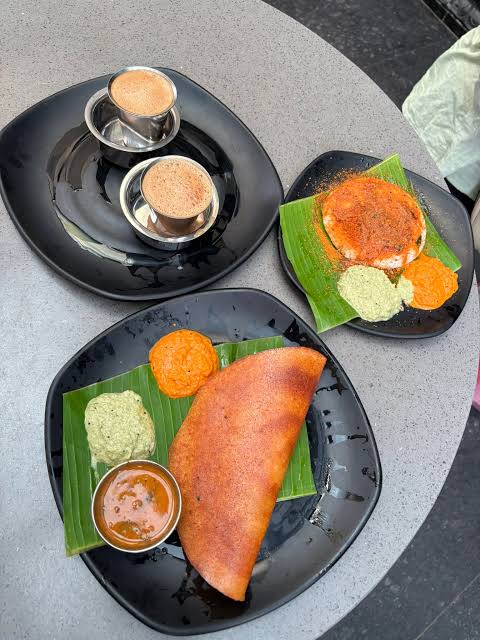
In South India, coffee is rarely an afterthought. It is brewed slowly, poured with a flourish and served in a steel tumbler and dabara that cool the drink as you sip. Filter coffee is both a flavour and a ritual, and understanding that ritual explains why it remains so loved.
How filter coffee is made
The method is simple but unhurried. Finely ground coffee, often mixed with chicory, is placed in the upper chamber of a metal filter with a perforated disc. Boiling water is poured over the grounds, and the liquid drips slowly into the lower vessel. This decoction is strong and aromatic. It is then mixed with hot milk and a little sugar to taste.
Speed is the enemy. The slow drip extracts a rounded, deep flavour that instant coffee cannot match. Many households keep the filter on the counter as a sign of hospitality: guests arriving means coffee is brewed.
The pour is part of the experience
Serving filter coffee involves pouring the mixture from a height between the tumbler and the dabara. This aerates the drink, cools it slightly and creates the characteristic froth. Done well, it is a small piece of theatre that regulars look forward to. Done badly, it makes a mess — which is why trained service teams practise it.
That attention to the small moments is a theme across South Indian dining. Our article on a great restaurant experience looks at why these details matter as much as the food itself.
Chicory, strength and local taste
Chicory is a common addition in South Indian filter coffee. It adds a slightly bitter, woody note and helps the coffee flavour stand up to milk. The ratio varies by family and by café, and regulars often have a strong opinion about it. That personal preference is part of what makes the drink a cultural marker rather than just a beverage.
Coffee as a social space
Coffee stalls and cafés have long been places where people meet before work, after a meal or in the afternoon. Conversations happen over a tumbler rather than a large cup. The pace is slower, and the drink signals that there is time to talk. Restaurants that serve filter coffee well are, in a sense, offering a small pause in the day.
For a first-time visitor, pairing a strong filter coffee with a crisp dosa is the quickest way to understand the appeal of a traditional South Indian breakfast. Sweet, savoury, hot and aromatic — it covers every note.
Carrying the tradition forward
As cafés expand into new cities, filter coffee travels with them. The challenge is consistency: the same grind, the same drip time and the same careful pour at every outlet. That is an operations question as much as a culinary one, and it connects to the discipline discussed in our guide to outlet expansion.
Good filter coffee does not need to be complicated. It needs good beans, patience and respect for the way people have enjoyed it for decades.